
Use Overpayments to Keep Track of Insurance Credits
Sometimes you need to track an insurance payment without applying it towards an encounter’s balance. You might receive a duplicate payment, need to resubmit a claim without showing a payment, or a payor might pay more than the amount due on a charge.
Use the Insurance Payments tool to enter an overpayment or change an existing payment into an overpayment. You can associate an overpayment with an encounter, along with adjustment information, without directly applying it towards the balance. Then you can track insurance credits on the account without interrupting the rest of the billing process. Later, you can easily reverse the payment (if you receive a “takeback”) or apply the payment to the encounter.
Video: Watch Use Overpayments to Keep Track of Insurance Credits to learn more.
Contents
Post an Overpayment
Read the procedure below to learn how to post an overpayment.
Open the Insurance Payments Tool
Select Insurance Payments from the Tools menu.
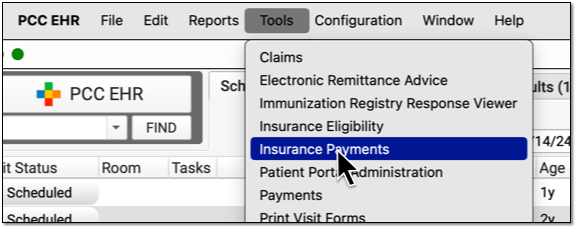
You can also jump to the Insurance Payments tool from other screens, like Unpaid Encounters and Posting Exceptions.
Find the Patient
Use a Claim ID or find the patient by name to review a list of their encounters.
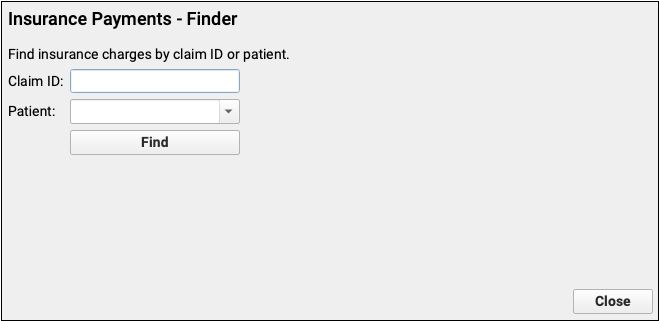
If you enter a Claim ID, you can jump directly to the payment screen.
Select an Encounter
If you found the patient by name, next select the correct encounter from the list of the patient’s encounters. Double-click on an encounter to open it.
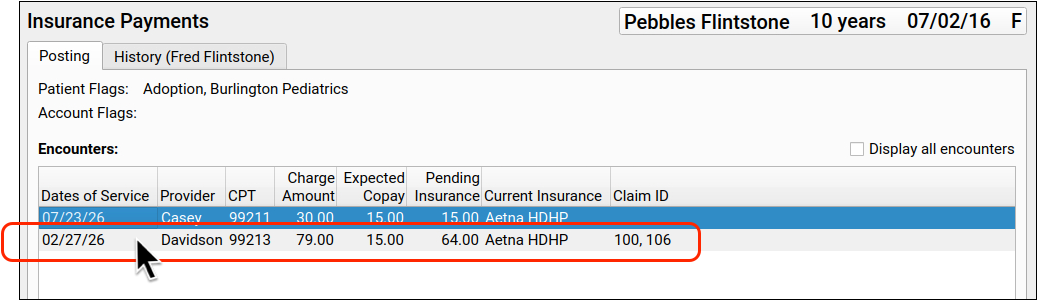
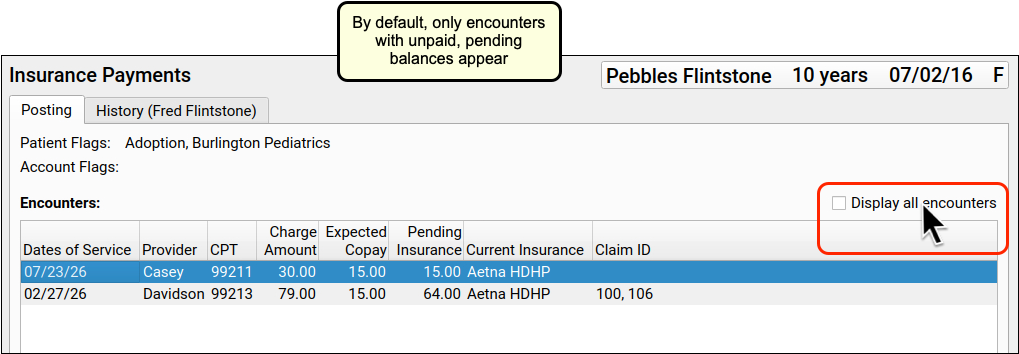
If the payment is for an encounter that is already paid off or no longer pends insurance, check the “Display all encounters” checkbox to include encounters for which there are no pending charges.
Select the Policy
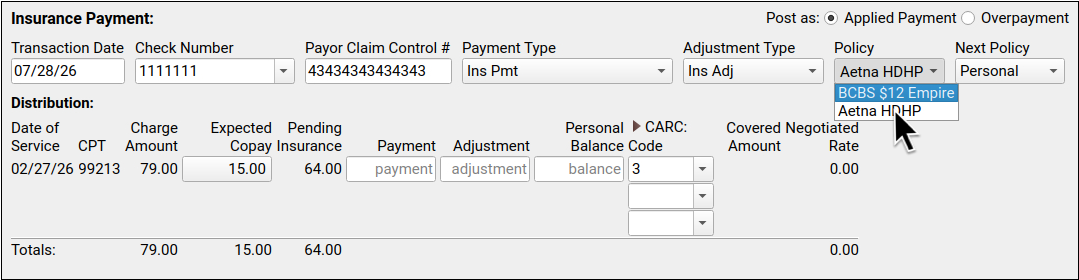
Before you enter payment amounts, indicate the payer who made the payment by selecting a policy. The responsible party is selected by default, but an overpayment might arrive from any of the patient’s active policies.
Indicate that the Payment is an Overpayment
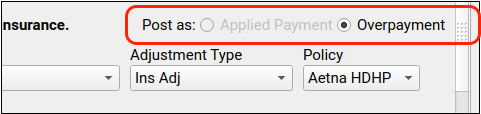
If the encounter has no unpaid charges pending insurance, the “Overpayment” checkbox will be selected for you. When there’s nothing due, a new payment must be an overpayment.
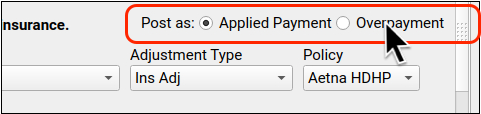
If there is a pending balance for the encounter, but you still wish to post a payment that will not apply towards that balance, select “Overpayment” manually.
Enter Remittance Information, Including Payments, Adjustments, and CARC Details
Review and update the transaction date, check number, and claim ID. Then enter the payment and adjustment amounts along with CARCs from the ERA or EOB.
As overpayments are frequently reversed or need to be reapplied later, it’s useful to enter all adjustment and CARC information, and not just the payment amount. As with the payment amount, these “informational” adjustments will not affect the balance.
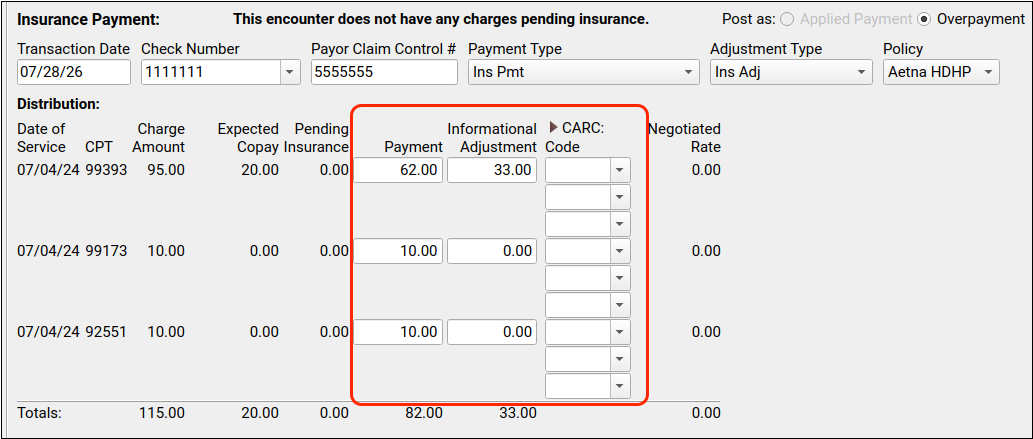
What is an 'Informational Adjustment?': Just like payments, adjustment information for an overpayment will not affect the balance due in any way. So why post the adjustments at all? You may need to review the adjustments that the payer indicated for each charge, especially if the payment ends up being applied later on. Adjustments posted with overpayments will appear on histories and billing records as “Informational Adjustments”.
Optionally Review Family Information and Enter Notes
As always, you can use other components on the Insurance Payments posting screen to better understand the history and issues with the claim.
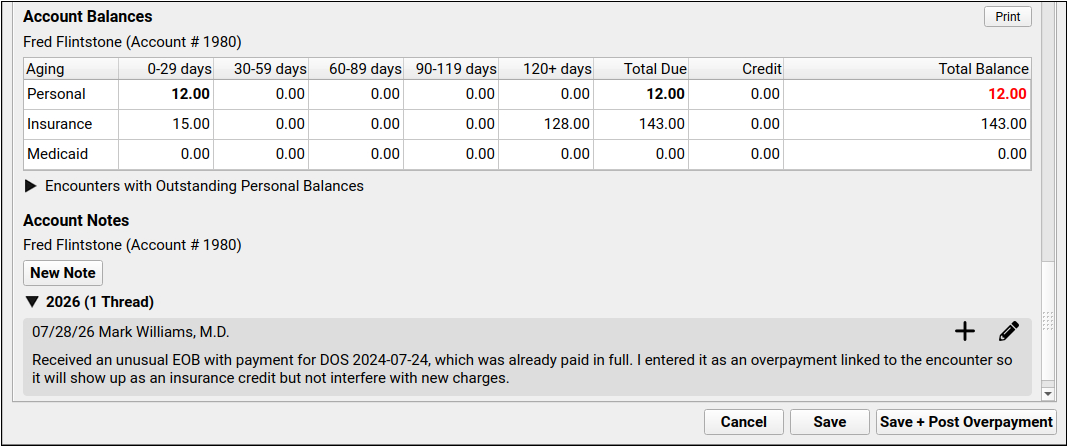
You can also enter a note in the Account Notes component to record the circumstances of the overpayment.
Click “Save + Post Overpayment”
Save your payment and any changes to the account.
Review Overpayments on an Account or an Encounter
Where can you see the overpayments (and the total insurance credit) on an account?
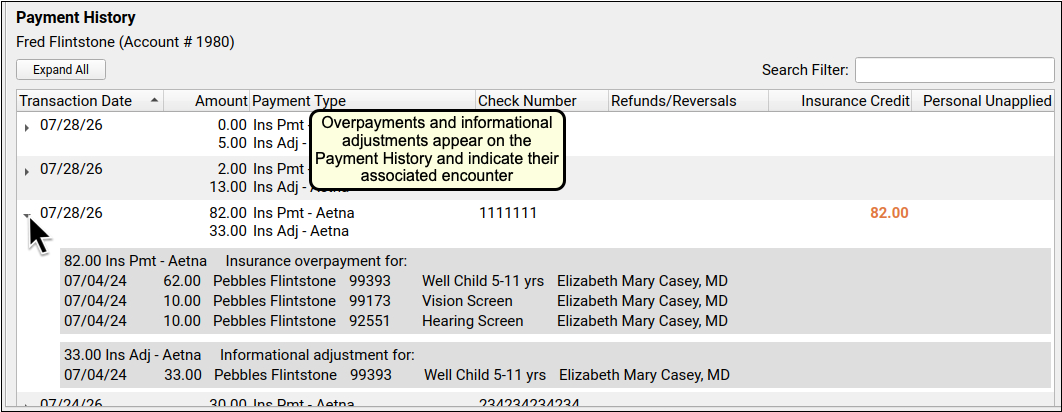
The Payment History tab displays overpayments along with accompanying informational adjustments. You can click a disclosure arrow to view associated charges. The overpayment and informational adjustment will not affect the balance on those charges.
The Account Balances component will indicate that there is an insurance credit on the account, which is separate from the outstanding insurance balance.

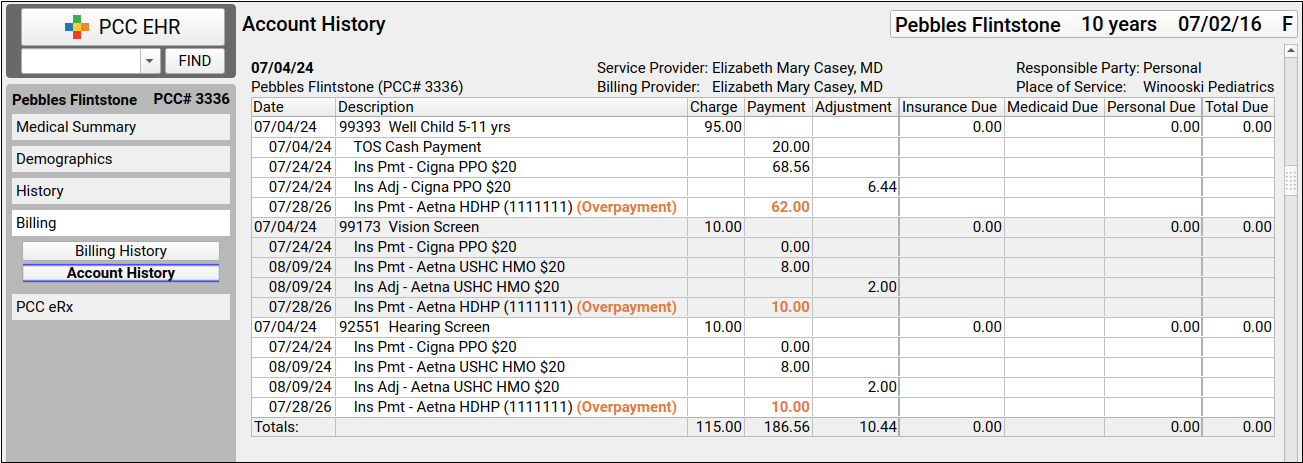
You can also see details of an overpayment in the account history found in the patient’s chart.
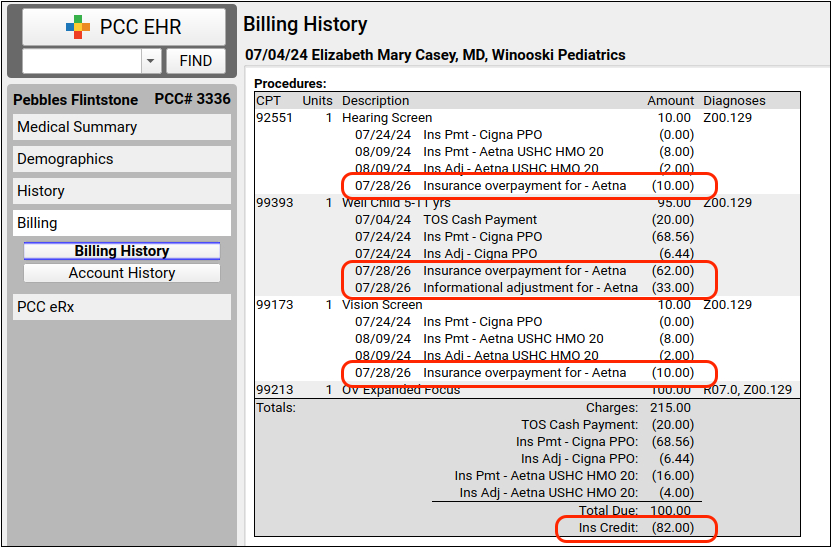
Overpayments and the resulting insurance credit amount are also included in the encounter’s billing history.
Change a Payment into an Overpayment, Reverse an Overpayment, Turn an Overpayment into an Applied Payment, and More
In addition to creating an overpayment, you can edit any insurance payment and turn it into an overpayment. You can do this whenever you need to unlink an insurance payment from an encounter, but still need to keep track of it on the patient’s record.
Later, if an overpayment is taken back, you can reverse it in the Insurance Payments tool just as you would reverse any other payment. You can also edit an overpayment and turn it into an applied payment.
What About Older Unlinked Insurance Payments?: Prior to the PCC 11.1 Fall 2026 software release, if your practice unlinked an insurance payment and left it waiting on the family’s account, that insurance payment applied towards the account’s personal balance and became a personal credit. Overpayments are a new way to track unlinked insurance payments that avoids this. However, the PCC 11.1 update did not change the behavior of any previous payments, change account balances, or affect insurance A/R totals in any way.